



Zorica Mećava · Nadia Rodriguez
Trust Explorer with Seal Assessment
Zorica MećavaSpecialist in Orthodontics · Dental Center Dr Mećava
When evaluating a restoration with marginal staining or a small chip, our first principle is always to preserve as much healthy tooth structure as possible. Not every defect requires complete replacement.
The decision is based on several key factors: the integrity of the restoration margins, the presence or absence of secondary caries, functional stability, occlusion, and the patient's esthetic expectations. If the restoration remains well-sealed, functional, and free of recurrent decay, a conservative repair is often the preferred option.
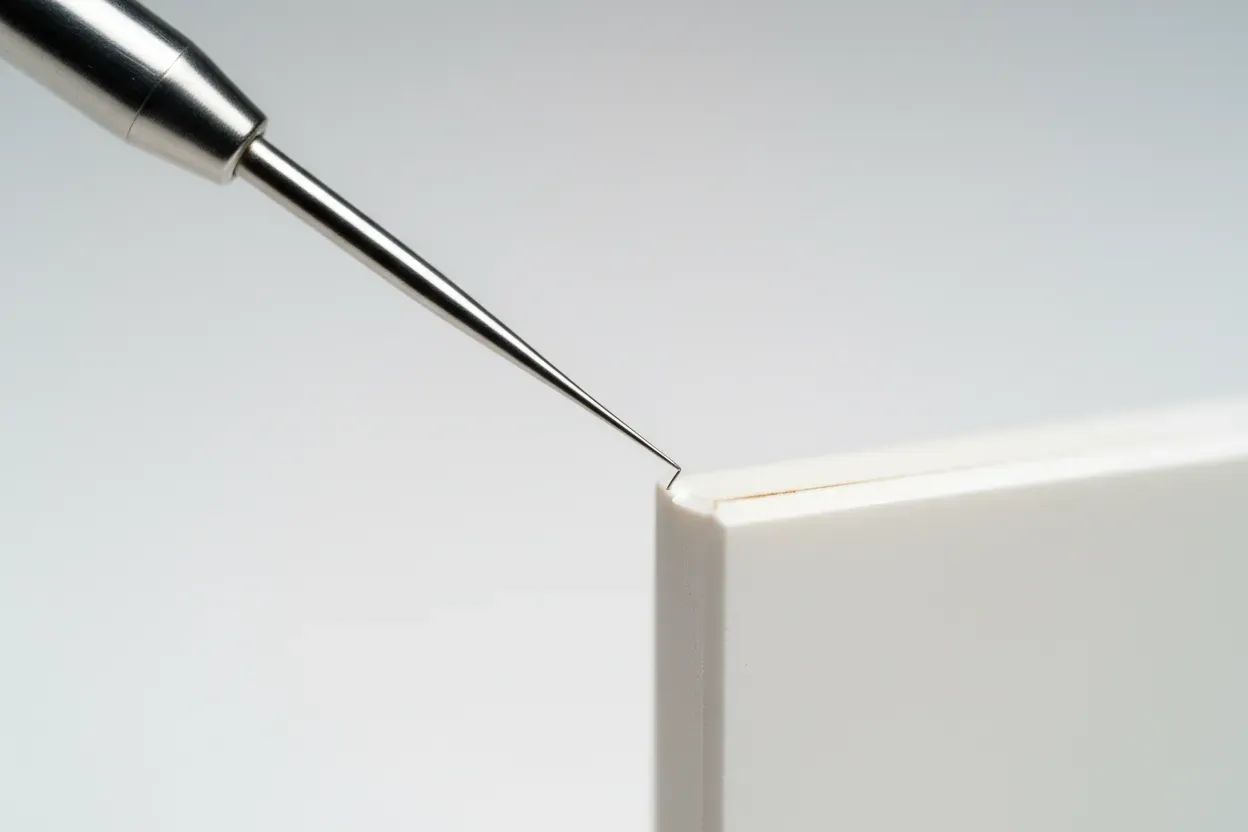
One simple clinical approach that has consistently guided our decision-making is the use of a sharp explorer combined with magnification and radiographic assessment when indicated. If the explorer catches significantly at the margin, if there is evidence of soft dentin or recurrent caries, or if the defect compromises function or esthetics, replacement may be warranted. Conversely, superficial staining without structural compromise often requires only polishing or minor repair.
Modern adhesive dentistry allows us to extend the life of restorations through minimally invasive interventions, reducing unnecessary removal of sound tooth tissue and improving long-term outcomes for patients.
Ultimately, the best treatment is not always the most extensive one, but the one that preserves biology while maintaining function and esthetics.
Respect Patient Concerns if Harmless
Nadia RodriguezCosmetic and Restorative Dentist · No Limits Dental
If a chip bothers a patient, I will always repair or replace a restoration. If the chip is harmless (no trap for food and bacteria and does not cause the patient pain) then I'm ok with leaving it alone.
Let Caries Risk Set Plan
A caries risk profile often sets the tone for a conservative choice. Dentists look at past decay, diet, saliva flow, plaque control, and fluoride use to judge future risk. Low risk patients may do well with small repairs and sealants, since new decay is less likely at the edges.
High risk patients may need replacement with stronger margins or added protection to limit new disease. Short recall times and better home care can shift the plan toward more repair in the future. Ask for a clear caries risk score and a matching treatment plan before choosing.
Weigh Residual Tooth Support Carefully
How much healthy tooth is left often decides repair versus replace. Thick enamel walls and sound cusp tips can support a small bonded patch. Thin walls, deep cracks, or wide undermined areas may not hold a partial fix for long.
A careful look with bitewing X‑rays and a bright light test can show hidden weakness at the margins. When support is poor, cuspal coverage or a new restoration can be more conservative in the long run by preventing a break. Ask for a simple map of what tooth parts are sound and what parts need cover before deciding.
Factor Occlusal Load before Patch
Chewing and clenching forces change the odds of success for a repair. Heavy grinders, steep cusps, and tight contacts can crush a small patch at the edge of a filling. Light contacts in a non‑stress area may let a tiny repair last for years.
Chairside checks with marking paper and simple bite tests can reveal risky spots. A guard or small bite adjustment can also shift the plan toward a more conservative fix. Get a thorough bite check and discuss load control before choosing repair or replace.
Base Strategy on Material Compatibility
The kind of material already in the tooth shapes whether a bonded repair will last. Fresh or well‑kept composite can often be roughened and bonded to with a good seal. Old composite, worn ceramic, or corroded metal can resist bonding or lead to color and wear mismatch.
Proper cleaners and special primers can help some surfaces, but not all combinations are reliable in the mouth. If bond limits make a weak joint, full replacement or a lab‑made onlay may be safer. Ask which materials are present and how well each will bond to a repair before moving ahead.
Ensure Dry Field or Choose Redesign
A clean, dry field is key for any adhesive repair. Saliva, blood, or mouth moisture can weaken the bond and shorten the life of a fix. Rubber dam use, gentle tissue control, and good suction raise the odds of a strong seal.
Deep or below‑the‑gum edges are hard to keep dry, so a glass ionomer base or a new design that lifts the margin may be needed. If good isolation cannot be reached, a full replacement with different margins can be the safer choice. Ask how isolation will be achieved and what plan exists if a dry field is not possible.